Area stampa
Phuturdex (phuturdex.com) raccoglie in un unico motore di ricerca i farmaci in sviluppo clinico nel mondo e le allerte di sicurezza delle agenzie del farmaco, collegando ogni dato alla fonte ufficiale e alla data. Il servizio è in italiano, inglese, francese e tedesco ed è gratuito fino al 31 marzo 2027.
Contatto per la stampa: Nicola Ramorino, fondatore · info@phuturdex.com · LinkedIn. Su richiesta prepariamo dati su una malattia, un’area terapeutica o un’azienda, e attiviamo un accesso per provare il servizio.
I numeri
| Dato | Valore al 30 ottobre 2026 |
|---|---|
| Studi clinici attivi seguiti nel mondo | 30.485, in 152 Paesi |
| Farmaci identificati | oltre 8.700 |
| Studi attivi con almeno un centro in Italia | 2.477 |
| Farmaci studiati in Italia | 1.351 |
| di cui sperimentali (non ancora approvati negli USA) | 774 |
| di cui per malattie rare | 305 |
| Farmaci sperimentali per il tumore del polmone non a piccole cellule studiati in Italia | 89 |
| Allerte di sicurezza, richiami e carenze raccolti | oltre 5.200, da 7 agenzie |
Comunicato stampa
In Italia sono in corso studi clinici su 774 farmaci sperimentali, 305 per malattie rare: nasce Phuturdex, che li rende consultabili a tutti, con fonte e data
Il servizio raccoglie in un unico motore di ricerca i farmaci in sviluppo nel mondo e le allerte di sicurezza delle agenzie del farmaco. Gratuito fino al 31 marzo 2027.
Quali farmaci si stanno sperimentando per una malattia, a che fase sono arrivati, se uno studio cerca pazienti in Italia, quando è attesa una decisione regolatoria. Sono informazioni pubbliche, ma sparse tra registri internazionali, agenzie e documenti in inglese. Phuturdex (phuturdex.com) le riunisce in un unico servizio in italiano, inglese, francese e tedesco, collegando ogni dato alla fonte ufficiale da cui proviene.
I numeri, aggiornati al 30 ottobre 2026, danno la misura della ricerca in corso. Nel mondo Phuturdex segue 30.485 studi clinici attivi su oltre 8.700 farmaci identificati, in 152 Paesi. In Italia gli studi attivi con almeno un centro sono 2.477 e riguardano 1.351 farmaci: 774 non sono ancora approvati negli Stati Uniti e 305 di questi sono studiati per malattie rare. Solo per il tumore del polmone non a piccole cellule i farmaci sperimentali in studio anche in Italia sono 89.
Per ogni farmaco Phuturdex mostra gli studi in corso, la fase, i Paesi e lo stato di reclutamento, le approvazioni negli Stati Uniti e nell’Unione europea, le designazioni di farmaco orfano, i brevetti e le scadenze regolatorie. Accanto alla pipeline c’è un servizio di allerte sui medicinali già in commercio: comunicazioni di sicurezza, richiami e carenze pubblicati da EMA, FDA e dalle agenzie nazionali di Italia (AIFA), Germania, Francia, Spagna e Regno Unito, controllati ogni giorno. Chi segue un farmaco riceve un’email quando esce un’allerta che lo riguarda.
Il metodo è pubblico: le regole con cui i nomi dei farmaci vengono collegati tra loro, i controlli di qualità e i limiti dei dati sono descritti nella pagina Metodo e fonti. Nessun dato è stimato senza dichiararlo, e la fonte ufficiale resta sempre quella di riferimento.
«Ho seguito per anni lo sviluppo dei farmaci per una malattia che conosco da vicino, e ogni volta dovevo cercare in registri diversi, in inglese, senza sapere se l’informazione fosse aggiornata», dice Nicola Ramorino, fondatore di Phuturdex. «Phuturdex nasce per rispondere in un minuto a una domanda semplice: cosa sta arrivando per questa malattia, e a che punto è. Lo apriamo gratis a medici, ricercatori, aziende e associazioni di pazienti, e chiediamo in cambio solo di dirci cosa funziona e cosa manca.»
Accesso anticipato. Fino al 31 marzo 2027 il servizio è completamente gratuito: si entra da phuturdex.com/app con la propria email, senza password e senza installare nulla: funziona nel browser di computer, tablet e telefono. Chi si iscrive in questa fase avrà condizioni riservate quando partiranno i piani a pagamento.
Immagini
Schermate di Phuturdex, in alta risoluzione: clic per aprire e salvare.
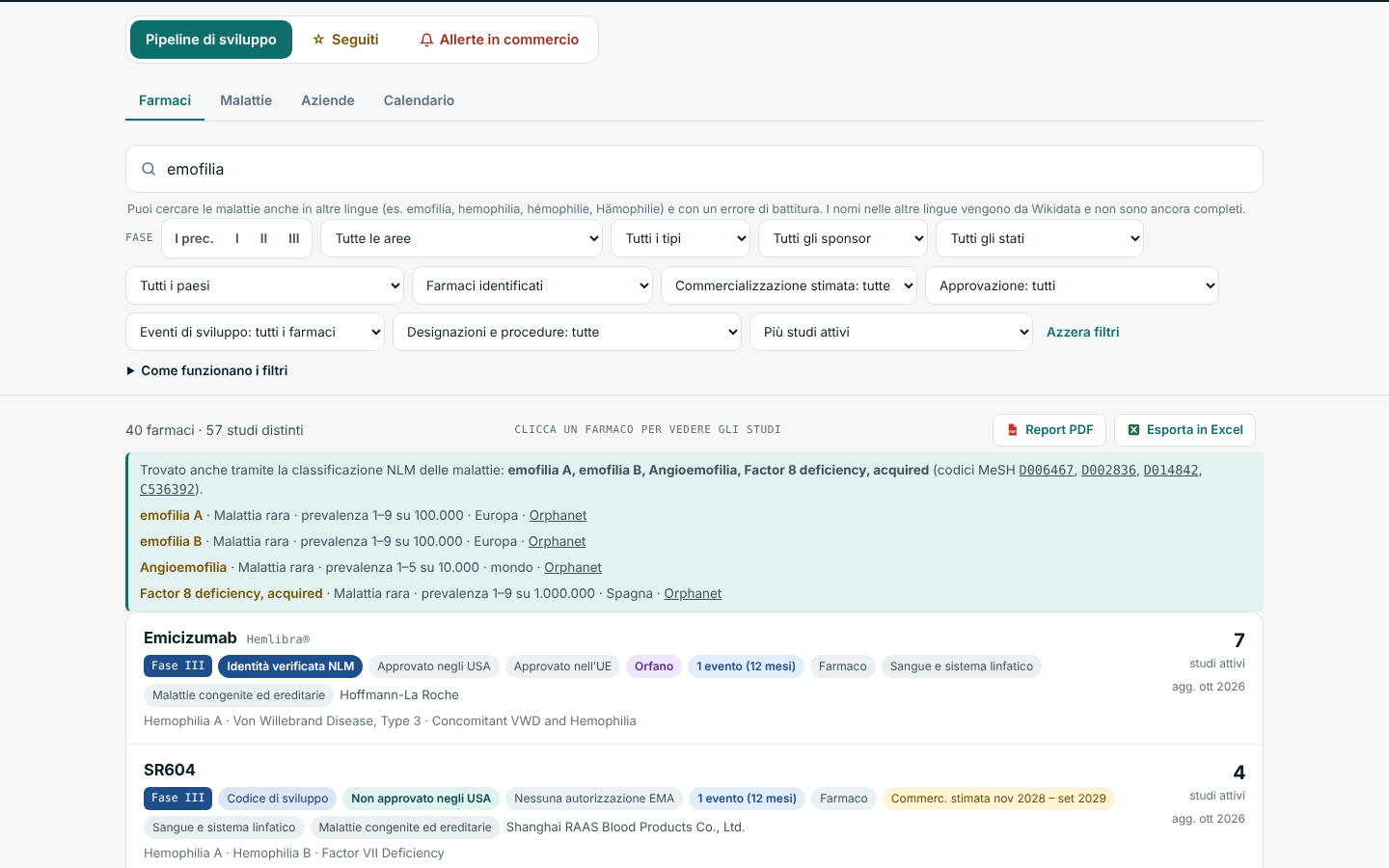 Ricerca dei farmaci in sviluppo, con filtri per fase, paese e stato
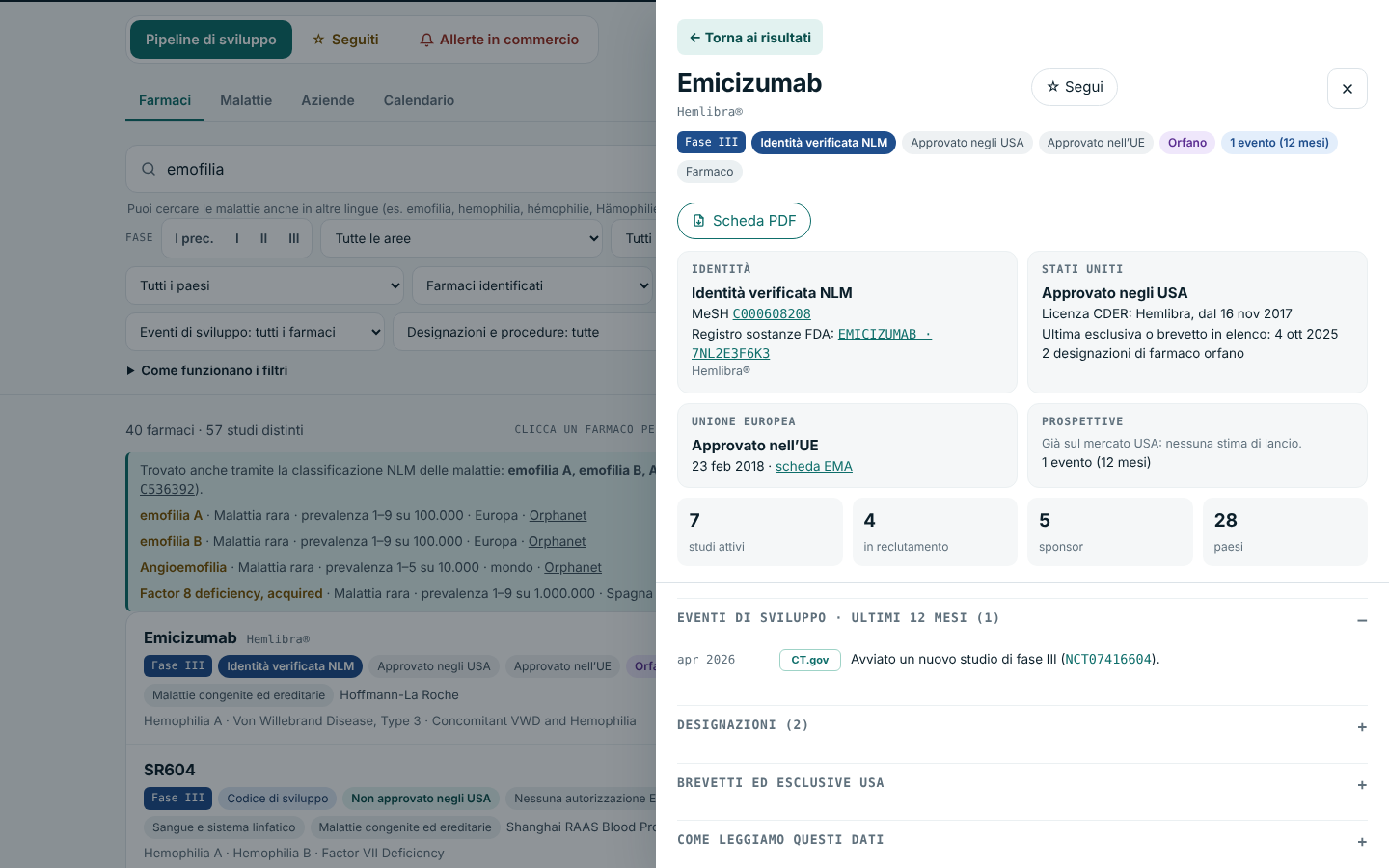 Scheda di un farmaco: studi, autorizzazioni, eventi, fonti
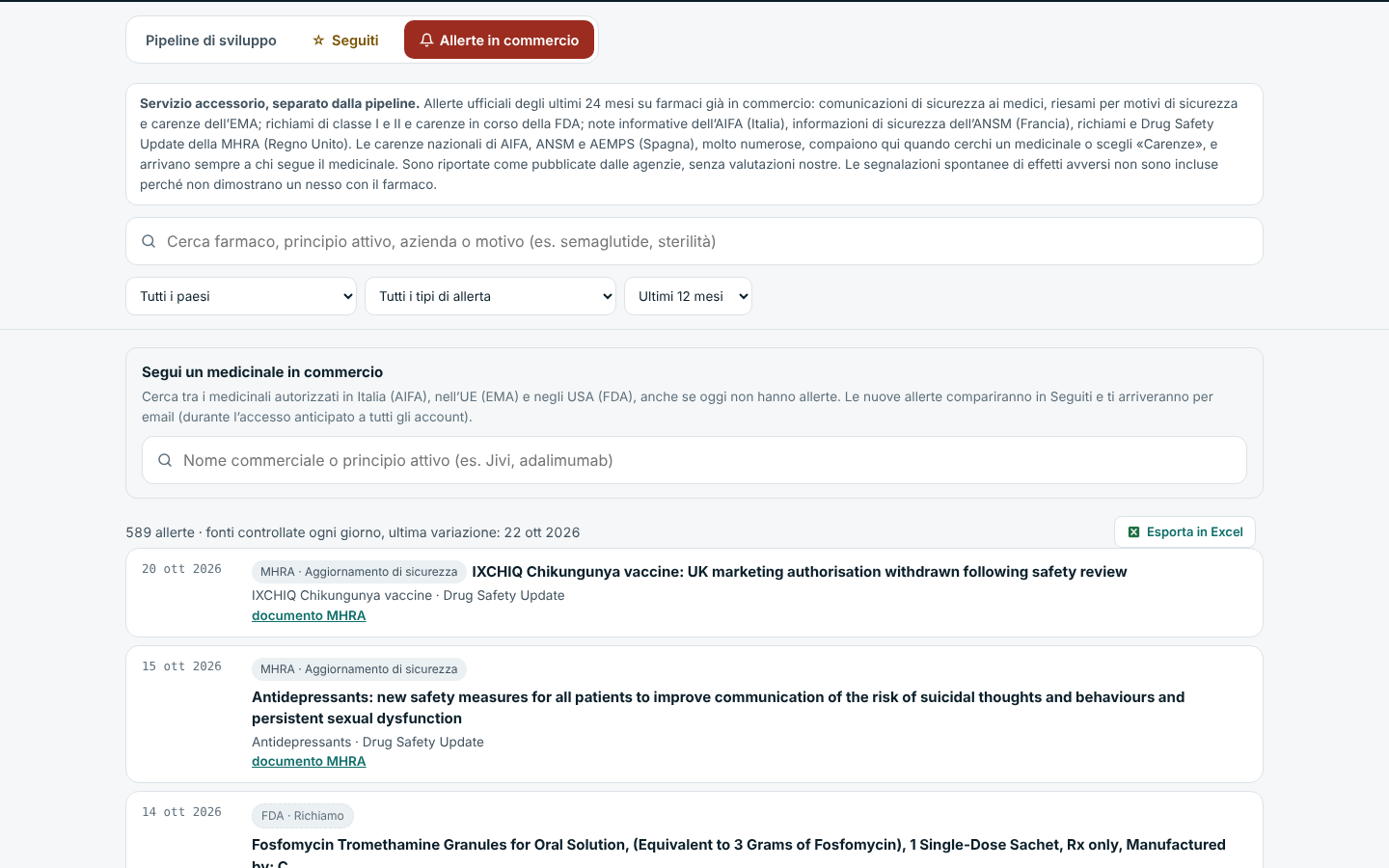 Allerte di sicurezza e carenze delle agenzie del farmaco


Per saperne di più
- Prova il servizio (accesso con email, gratuito fino al 31 marzo 2027)
- Metodo e fonti dei dati: regole, controlli di qualità e limiti dichiarati
- Phuturdex per medici e ricercatori
Press area
Phuturdex (phuturdex.com) brings together in one search engine the drugs in clinical development worldwide and the safety alerts of the medicines agencies, linking every fact to its official source and date. The service is in Italian, English, French and German and is free until 31 March 2027.
Press contact: Nicola Ramorino, founder · info@phuturdex.com · LinkedIn. On request we prepare data on a disease, a therapeutic area or a company, and set up access to try the service.
Key figures
| Figure | Value as of 30 October 2026 |
|---|---|
| Active clinical trials followed worldwide | 30,485, in 152 countries |
| Drugs identified | over 8,700 |
| Active trials with at least one site in Italy | 2,477 |
| Drugs studied in Italy | 1,351 |
| of which experimental (not yet approved in the US) | 774 |
| of which for rare diseases | 305 |
| Experimental drugs for non-small cell lung cancer studied in Italy | 89 |
| Safety alerts, recalls and shortages collected | over 5,200, from 7 agencies |
Press release
Clinical trials on 774 experimental drugs are under way in Italy, 305 for rare diseases: Phuturdex opens them to everyone, with source and date
The service brings together in one search engine the drugs in development worldwide and the safety alerts of the medicines agencies. Free until 31 March 2027.
Which drugs are being tested for a disease, how far they have got, whether a trial is looking for patients in Italy, when a regulatory decision is expected. This information is public, but scattered across international registries, agencies and documents. Phuturdex (phuturdex.com) brings it together in one service in Italian, English, French and German, linking every fact to the official source it comes from.
The figures, as of 30 October 2026, show the scale of the research under way. Worldwide Phuturdex follows 30,485 active clinical trials on over 8,700 identified drugs, in 152 countries. In Italy 2,477 active trials have at least one site and involve 1,351 drugs: 774 are not yet approved in the United States and 305 of these are studied for rare diseases. For non-small cell lung cancer alone, 89 experimental drugs are being studied in Italy too.
For every drug Phuturdex shows the ongoing trials, phase, countries and recruitment status, approvals in the United States and the European Union, orphan designations, patents and regulatory dates. Next to the pipeline there is an alert service on medicines already on the market: safety communications, recalls and shortages published by EMA, FDA and the national agencies of Italy (AIFA), Germany, France, Spain and the United Kingdom, checked every day. Whoever follows a drug gets an email when an alert about it is published.
The method is public: the rules used to link drug names, the quality checks and the limits of the data are described on the Method and sources page. No figure is estimated without saying so, and the official source always remains the reference.
“For years I followed the development of drugs for a disease I know closely, and every time I had to search different registries, in English, without knowing whether the information was up to date,” says Nicola Ramorino, founder of Phuturdex. “Phuturdex was born to answer a simple question in a minute: what is coming for this disease, and how far has it got. We are opening it free to physicians, researchers, companies and patient associations, and all we ask in return is to tell us what works and what is missing.”
Early access. Until 31 March 2027 the service is completely free: you enter from phuturdex.com/app with your email, no password and nothing to install: it works in the browser on computers, tablets and phones. Those who join in this phase will have reserved terms when paid plans start.
Images
Phuturdex screenshots in high resolution: click to open and save.
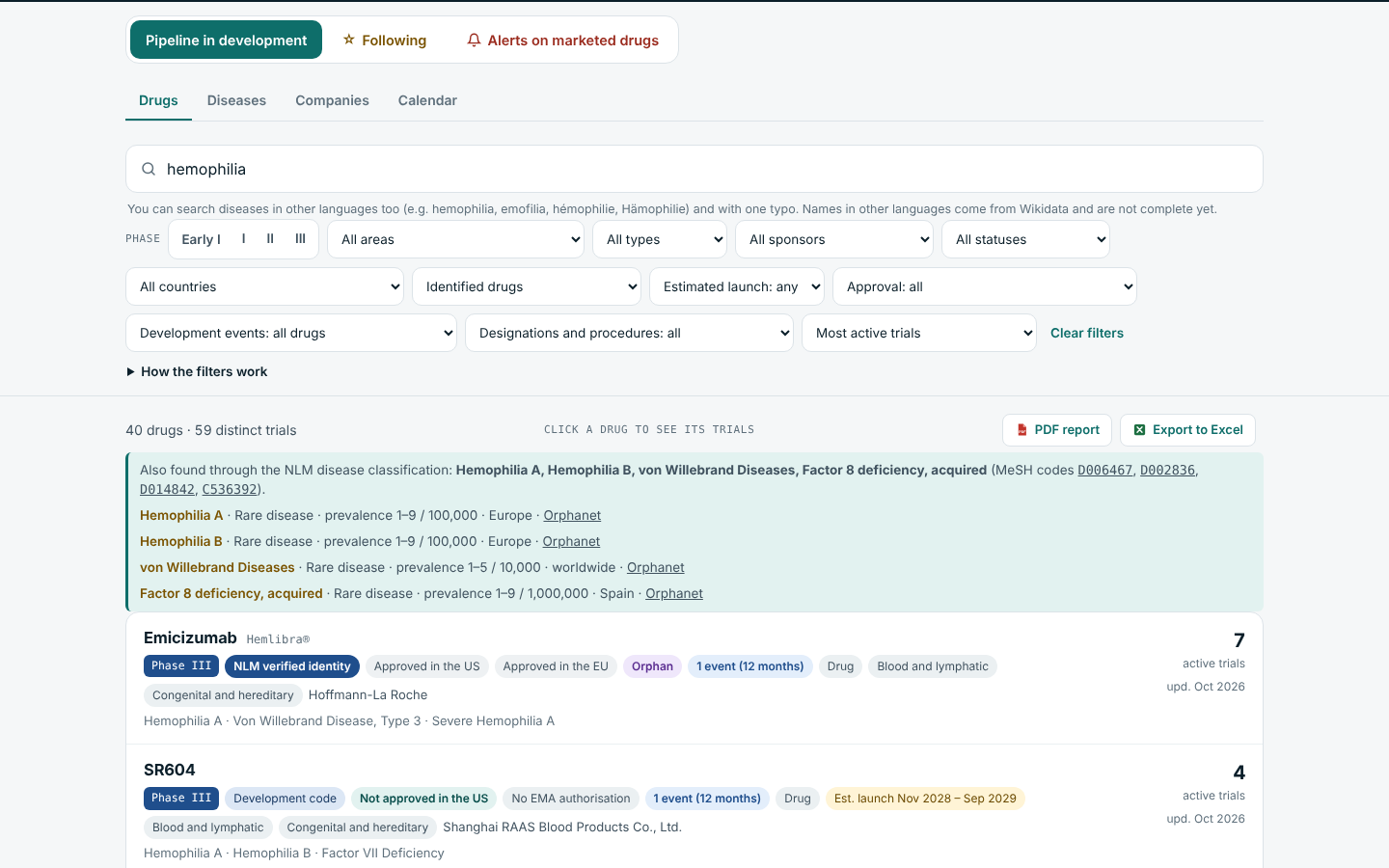 Search of drugs in development, with filters by phase, country and status
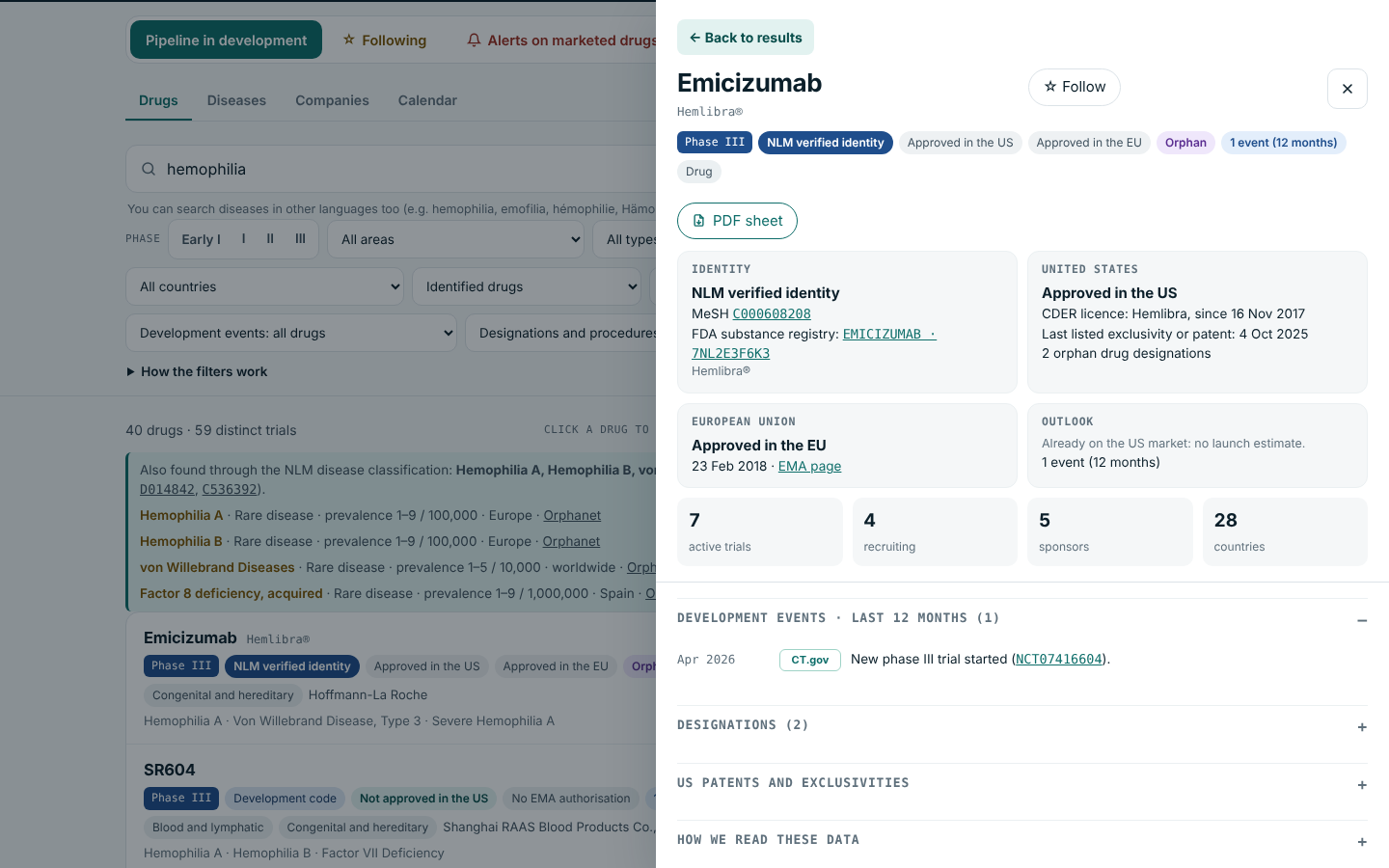 Drug sheet: trials, approvals, events, sources
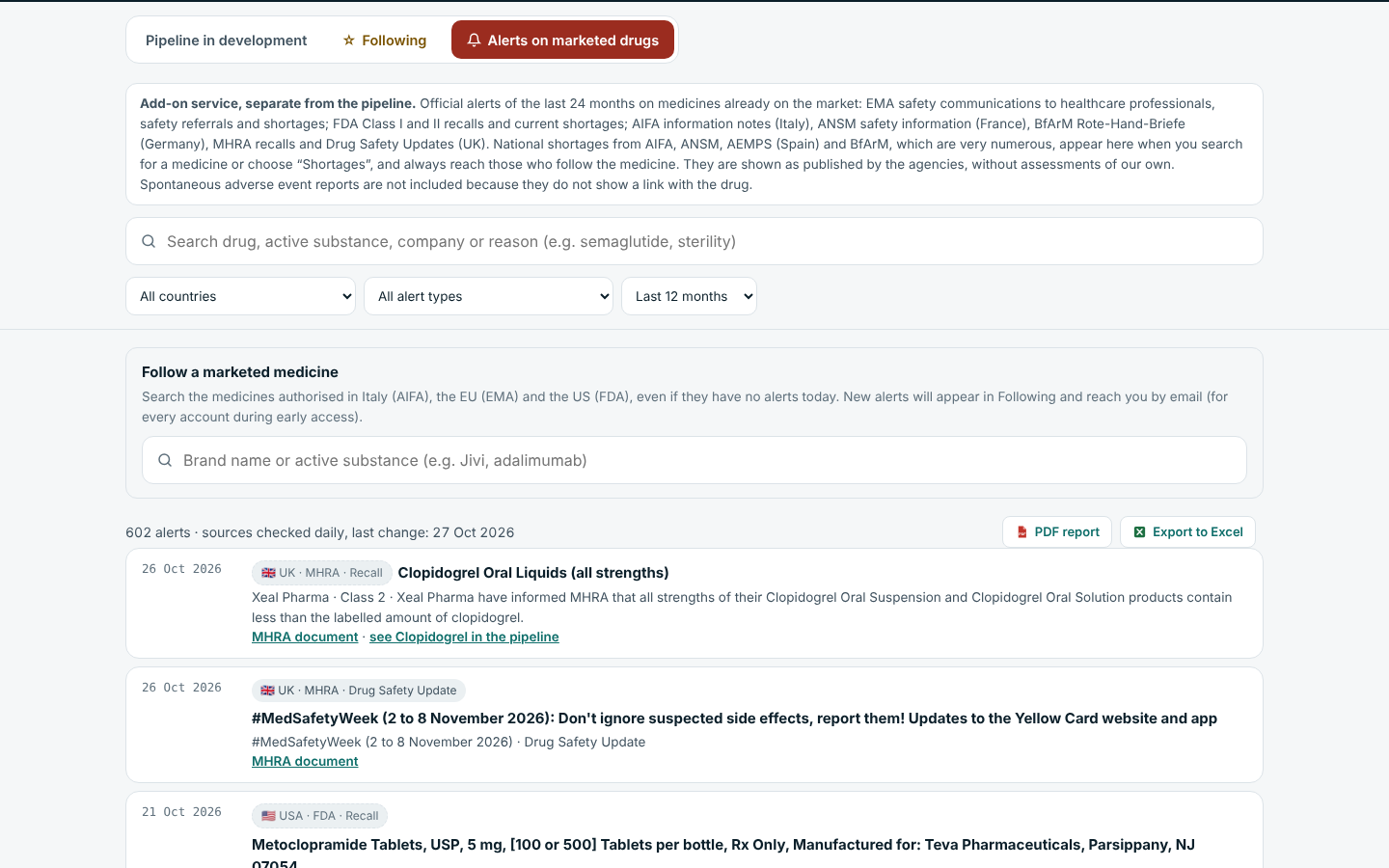 Safety alerts and shortages from the medicines agencies
Learn more
- Try the service (sign in with your email, free until 31 March 2027)
- Method and data sources: rules, quality checks and declared limits
- Phuturdex for physicians and researchers